
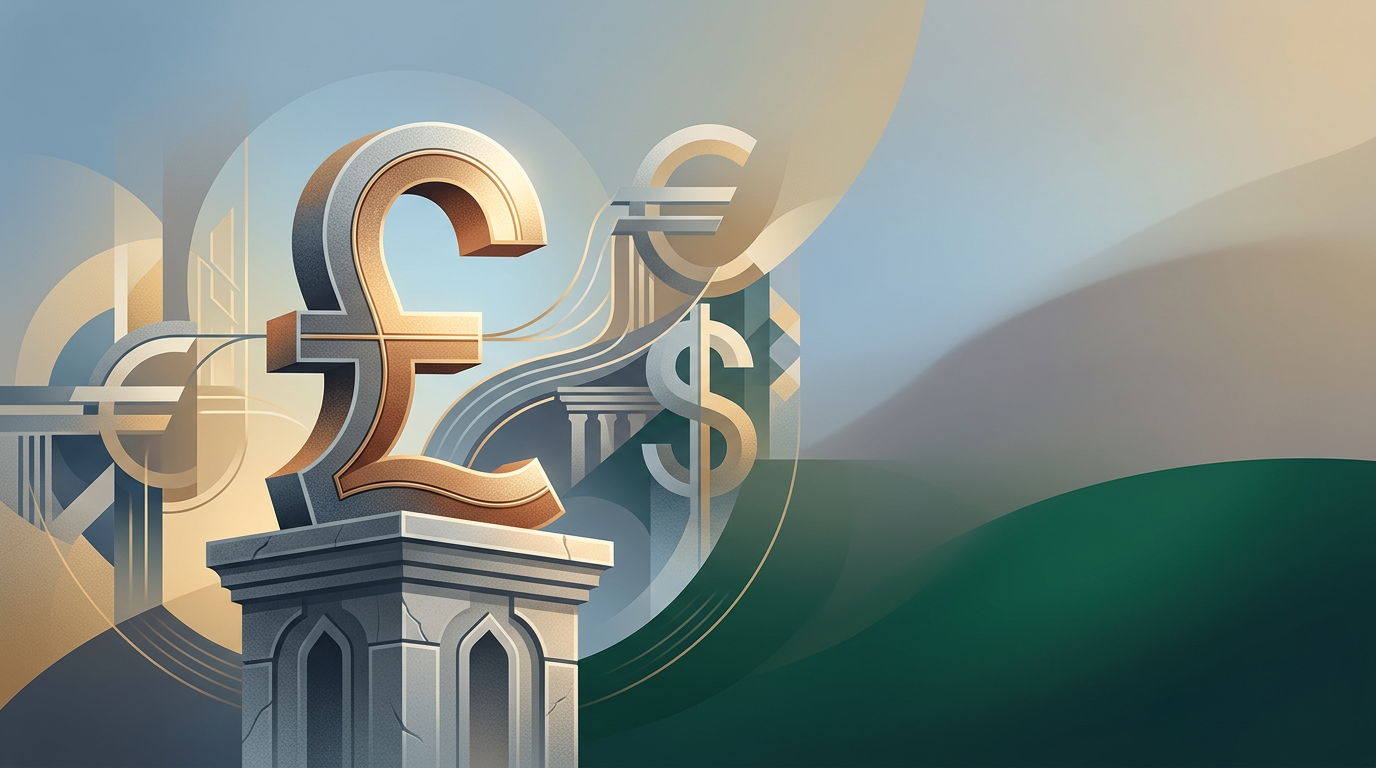
GBP is the currency code for the pound sterling, the official currency of the United Kingdom. It consistently ranks as one of the four most traded currencies in global forex markets, sitting behind the US dollar, euro, and Japanese yen. If you trade, travel, or hold sterling in any capacity, understanding what the code means and what moves it is genuinely useful, not just trivia.
GBP: The Quick Answer and Why the Code Is Not UKP
GBP stands for Great British Pound. The code follows the ISO 4217 standard, which assigns every currency a three-letter identifier. The first two letters derive from the country or region, and the third identifies the currency unit. So GB comes from Great Britain, and P stands for pound.
Here is where most explanations go quiet. The United Kingdom includes Great Britain (England, Scotland, and Wales) plus Northern Ireland. ISO 4217 used Great Britain as the reference, not the United Kingdom, which is why the code is GBP and not UKP. That distinction is baked into the standard and has stayed there ever since.
The official name, pound sterling, carries its own history. The pound symbol £ comes from the Latin word libra, meaning scales or balance, a Roman unit of weight. Sterling silver gave the currency its second name. The combination has been in use since medieval England, making GBP one of the oldest currencies still circulating anywhere in the world.
GBP Nicknames: Quid, Cable, and Nicker
Traders and the general public use a few informal names worth knowing.
- Quid: The everyday British slang for one pound. The exact origin is disputed, but it has been common usage for centuries.
- Nicker: Older Cockney slang, also meaning one pound. Less common now but still heard.
- Cable: This one has a specific, traceable origin. In the mid-19th century, a transatlantic telegraph cable was laid under the Atlantic Ocean to transmit financial data between London and New York. The GBP/USD exchange rate was transmitted over that cable, and traders started calling the pair “cable.” The nickname stuck and is still used by forex professionals today when referring to GBP/USD.
GBP in Forex Markets: Key Pairs and What Moves Sterling
Sterling accounts for roughly 13% of daily global forex turnover, according to the Bank for International Settlements. GBP is also one of five currencies included in the IMF’s Special Drawing Rights (SDR) basket, alongside the USD, EUR, JPY, and CNY. That membership reflects its global reserve status.
The most actively traded GBP pairs are GBP/USD (cable), EUR/GBP, and GBP/JPY (sometimes called “the dragon” for its volatility). GBP/JPY in particular can move sharply; pip values on a mini lot of 10,000 units are calculated as 0.01 multiplied by 10,000, giving 100 JPY per pip, then converted to GBP at the prevailing rate.
The Bank of England issues GBP and sets the base rate. Its Monetary Policy Committee decisions are the single biggest scheduled catalyst for sterling moves. Beyond rates, the key data points to watch are:
- CPI inflation releases, which influence rate expectations directly
- GDP growth figures, signalling economic momentum or contraction
- Trade balance data, showing the UK’s export and import position
- Political events, which can reprice sterling rapidly and without warning
None of that is background noise. A surprise CPI print or an unexpected BoE statement can move GBP/USD by 100 pips or more within minutes. If you trade sterling pairs, these releases deserve a place on your economic calendar every single month.
Sterling’s Modern Turning Points: Brexit, the 2022 Mini-Budget, and What Comes Next
Two recent episodes showed just how politically exposed GBP is.
The June 2016 Brexit referendum result triggered an immediate GBP/USD collapse from around 1.50 to below 1.32 overnight, one of the largest single-day moves the pair had ever recorded. Sterling spent the following years trading at a structural discount to its pre-referendum levels as trade uncertainty persisted.
Then in September 2022, the Truss government’s mini-budget announced unfunded tax cuts on a scale that alarmed bond markets. GBP/USD fell to a historic low of approximately 1.0350, close to parity with the dollar. The Bank of England was forced into emergency gilt-buying operations to stabilise markets. The episode lasted days but illustrated how quickly fiscal credibility can translate into currency risk.
Looking forward, the Bank of England is actively researching a digital pound, often referred to as a CBDC (Central Bank Digital Currency). The project remains in an exploratory phase, but if implemented, it would represent the most significant structural change to GBP in decades. Worth watching, even if no launch date is confirmed.
What This Means If You Trade GBP
GBP stands for Great British Pound. It is one of the world’s most liquid currencies, with deep institutional participation and a clear set of macro drivers you can actually track. The BoE calendar, UK CPI dates, and GDP release schedule are freely available and should be part of your prep before taking any position in a GBP pair. Sterling rewards traders who do that groundwork and punishes those who do not.
Risk warning: Trading forex and CFDs carries a high risk of loss and may not be suitable for all investors. You should never trade with money you cannot afford to lose. Past performance is not a reliable indicator of future results. This article is for educational purposes only and does not constitute financial, investment, or trading advice. If you are unsure, seek advice from an independent, suitably qualified financial adviser.










[…] rather than “pounds” or “sterling”, if you want the full background on that notation, the complete guide to what GBP stands for in currency explains the history […]